{level}
{minutes ? About {minutes} min read : null}
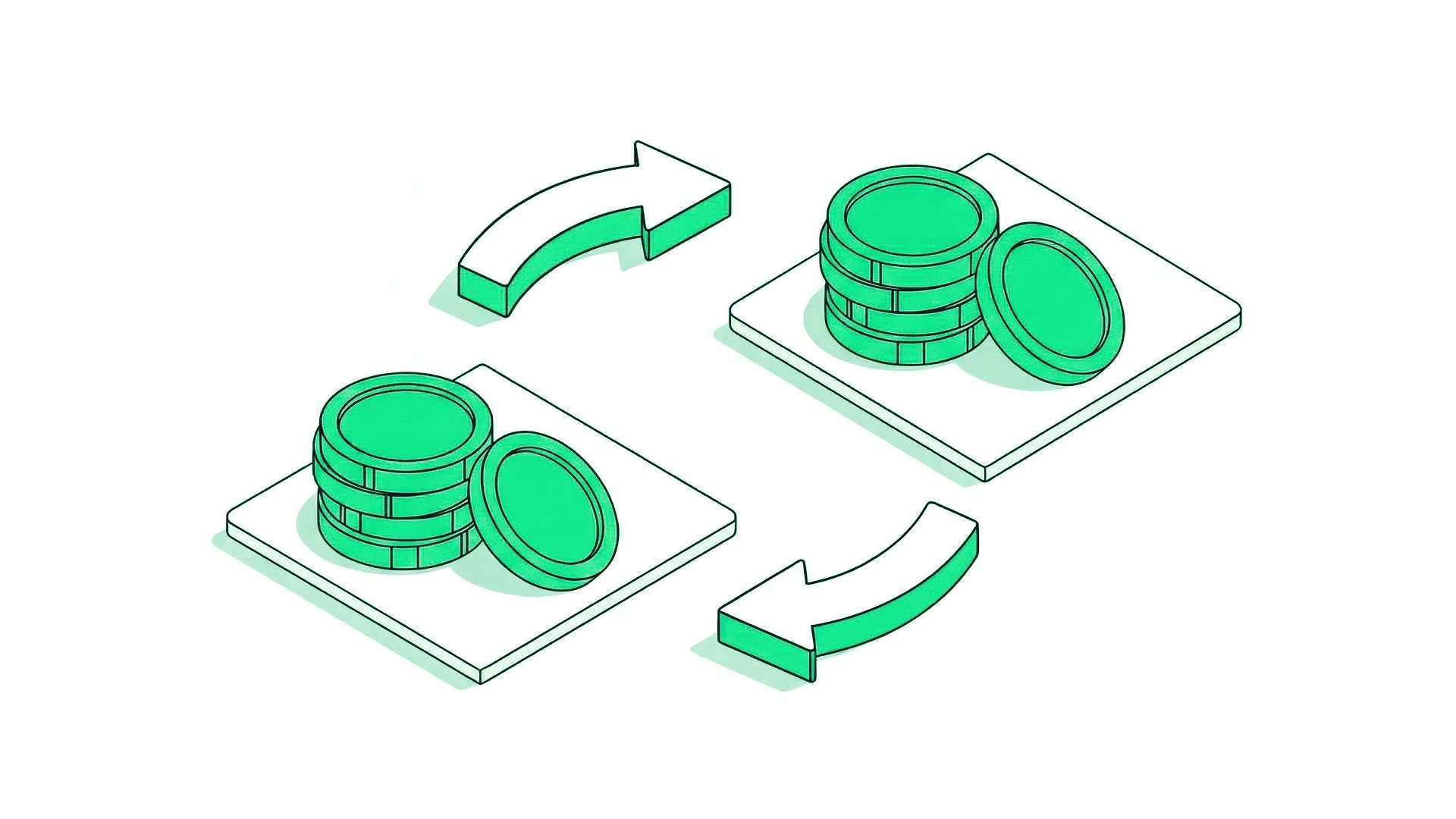 In traditional financial markets, asset exchange runs through an order book, which matches buyers and sellers directly: every trade needs a counterparty willing to trade at the same price at that exact moment.
Automated market makers (AMMs) change this. Instead of waiting for another person, you trade against a "liquidity pool", a giant pile of tokens held by a smart contract on the blockchain. This means you can trade 24/7, instantly, without needing to find a specific buyer or seller.
## How it works: the digital vending machine
Think of an
In traditional financial markets, asset exchange runs through an order book, which matches buyers and sellers directly: every trade needs a counterparty willing to trade at the same price at that exact moment.
Automated market makers (AMMs) change this. Instead of waiting for another person, you trade against a "liquidity pool", a giant pile of tokens held by a smart contract on the blockchain. This means you can trade 24/7, instantly, without needing to find a specific buyer or seller.
## How it works: the digital vending machine
Think of an 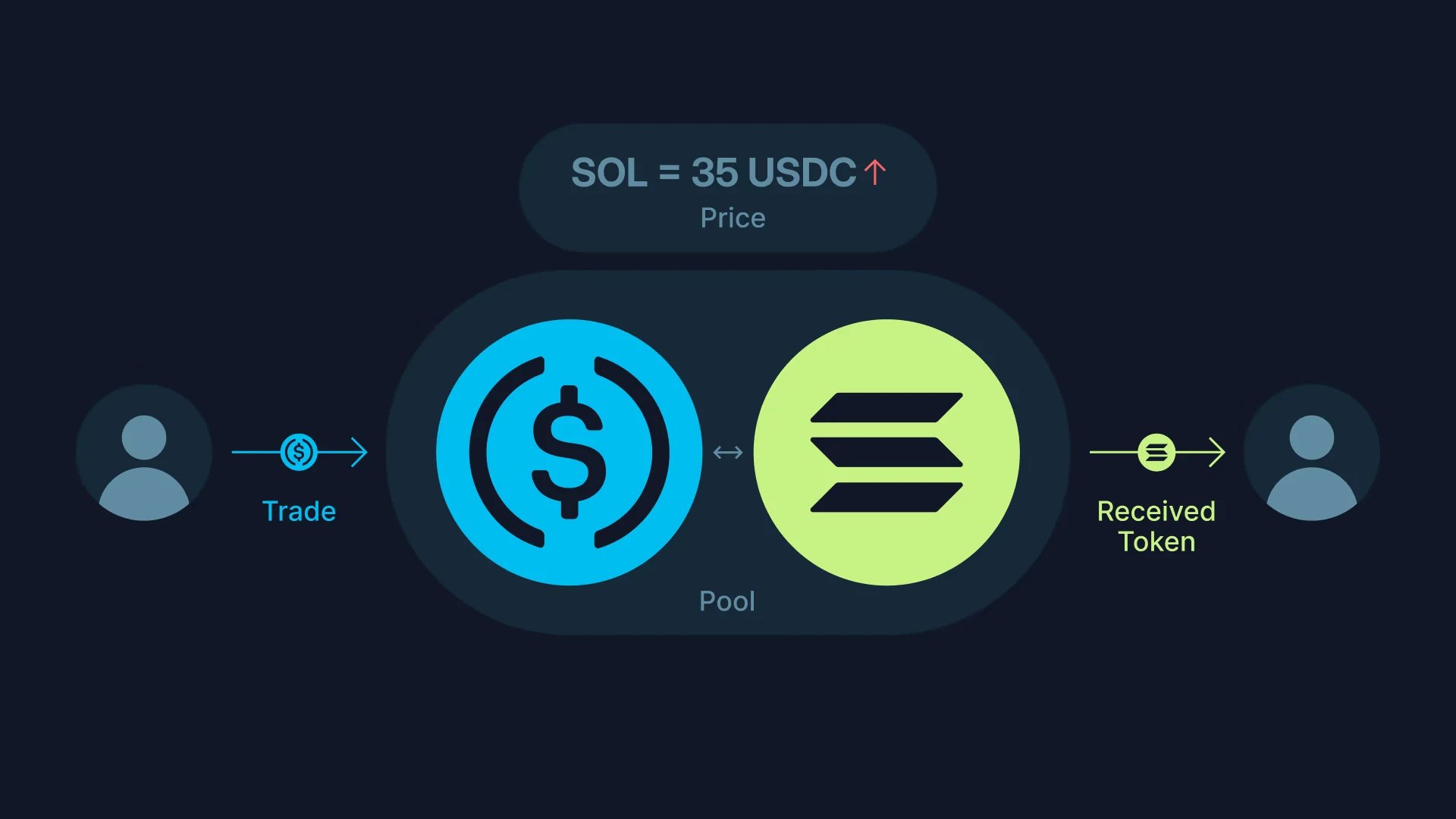 When you swap on Jupiter, you do not have to pick a machine: Spot scans pools across many AMMs and other liquidity sources, and can split your trade between them. See [Spot](/user-docs/trade/spot).
## Liquidity providers: being the house
The "money in the machine" has to come from somewhere. It comes from users called liquidity providers (LPs).
When you become an LP, you deposit your assets into the machine so that others can trade against them. In a classic pool, you put in an equal value of two tokens (like \$100 of SOL and \$100 of USDC); some pools also accept a single token and compose the pair for you. In return, you get a "receipt", an LP token or, in some pools, a position NFT, which proves you own a share of that pool. When you withdraw, you get your share of the pool back, which may hold a different mix of tokens than the one you put in.
On Jupiter, Smart Vaults on Jupiter Lend let your collateral or debt serve as liquidity for Jupiter AMM and earn trading fees. [JLP](/user-docs/earn/jlp) is a different kind of pool: it acts mainly as the counterparty to traders on the Jupiter Perps markets it backs, which are priced by oracles rather than by a curve.
## How liquidity providers earn fees
Why would you let others trade with your money? Because liquidity providers receive a share of the trading fees.
* Trading fees: every time someone makes a swap using the pool you are in, they pay a trading fee set by the pool.
* Earning your share: that fee, sometimes minus a cut kept by the protocol, is split among everyone who provided money to the pool, in proportion to their share.
* Fees that stay in the pool: in many pools, fees are added back to the pool itself, so over time each share, and your receipt, can be worth more than what you originally put in. On Jupiter, Smart Vault trading fees flow back to your position, shown as Trading APR, and JLP accrues a share of the fees from the Jupiter Perps markets it backs.
## The risks: price changes
The biggest risk for an LP is simply the price of the assets changing.
If you put SOL into a pool and the price of SOL crashes or skyrockets compared to the other token in the pool, the "vending machine" will rebalance your holdings. You might end up with more of the token that is worth less.
This is often called impermanent loss, but the simple version is: if prices move a lot while your money is in the pool, you might have been better off just holding the tokens in your regular wallet. On pairs whose tokens track each other closely, such as two dollar stablecoins, the effect stays small unless one of them loses its peg.
Fee income is not guaranteed either: it depends on trading volume, so a quiet pool earns little, and income can drop or stop. LPs weigh trading volume, price stability and each pool's own risks, and there are many different techniques for different risk profiles and situations.
## Go deeper
When you swap on Jupiter, you do not have to pick a machine: Spot scans pools across many AMMs and other liquidity sources, and can split your trade between them. See [Spot](/user-docs/trade/spot).
## Liquidity providers: being the house
The "money in the machine" has to come from somewhere. It comes from users called liquidity providers (LPs).
When you become an LP, you deposit your assets into the machine so that others can trade against them. In a classic pool, you put in an equal value of two tokens (like \$100 of SOL and \$100 of USDC); some pools also accept a single token and compose the pair for you. In return, you get a "receipt", an LP token or, in some pools, a position NFT, which proves you own a share of that pool. When you withdraw, you get your share of the pool back, which may hold a different mix of tokens than the one you put in.
On Jupiter, Smart Vaults on Jupiter Lend let your collateral or debt serve as liquidity for Jupiter AMM and earn trading fees. [JLP](/user-docs/earn/jlp) is a different kind of pool: it acts mainly as the counterparty to traders on the Jupiter Perps markets it backs, which are priced by oracles rather than by a curve.
## How liquidity providers earn fees
Why would you let others trade with your money? Because liquidity providers receive a share of the trading fees.
* Trading fees: every time someone makes a swap using the pool you are in, they pay a trading fee set by the pool.
* Earning your share: that fee, sometimes minus a cut kept by the protocol, is split among everyone who provided money to the pool, in proportion to their share.
* Fees that stay in the pool: in many pools, fees are added back to the pool itself, so over time each share, and your receipt, can be worth more than what you originally put in. On Jupiter, Smart Vault trading fees flow back to your position, shown as Trading APR, and JLP accrues a share of the fees from the Jupiter Perps markets it backs.
## The risks: price changes
The biggest risk for an LP is simply the price of the assets changing.
If you put SOL into a pool and the price of SOL crashes or skyrockets compared to the other token in the pool, the "vending machine" will rebalance your holdings. You might end up with more of the token that is worth less.
This is often called impermanent loss, but the simple version is: if prices move a lot while your money is in the pool, you might have been better off just holding the tokens in your regular wallet. On pairs whose tokens track each other closely, such as two dollar stablecoins, the effect stays small unless one of them loses its peg.
Fee income is not guaranteed either: it depends on trading volume, so a quiet pool earns little, and income can drop or stop. LPs weigh trading volume, price stability and each pool's own risks, and there are many different techniques for different risk profiles and situations.
## Go deeper