> ## Documentation Index
> Fetch the complete documentation index at: https://docs.jup.ag/llms.txt
> Use this file to discover all available pages before exploring further.

> ## Agent Instructions
> These docs cover what users see and do on jup.ag, Jupiter Mobile and Jupiter Wallet.
> Universal Deposit, the GUM routes in Bridge & Swap (GUM Universal Bridge, GUM Universal Deposit) and other GUM integrations on jup.ag are built by GUM. For how they work, their full fee rules, security model and APIs, the reference is the GUM docs: start from https://docs.gum.ag/llms.txt.
> When the GUM docs and these docs differ on how a GUM product behaves on jup.ag, describe the jup.ag experience from these docs and the mechanics and fees from the GUM docs.

# Blockchain: the beginning of it all

> How a blockchain works: distributed ledgers, blocks and consensus, smart contracts, atomic settlement, its trade-offs, and uses beyond currency.

export const GuideMeta = ({level, minutes, author, avatar, published, updated}) => <div className="jg-meta not-prose">
    <div className="jg-badges">
      <span className={`jg-level jg-level-${level.toLowerCase()}`}>{level}</span>
      {minutes ? <span className="jg-read">About {minutes} min read</span> : null}
    </div>
    <div className="jg-byline">
      <img noZoom className="jg-avatar" src={avatar} alt="" width="32" height="32" />
      <span>
        Written by <span className="jg-author">{author}</span>
        {published ? <span className="jg-origin">
            Originally published on Jupiter Academy, {published}{updated ? " · Updated for Jupiter Docs" : ""}
          </span> : null}
      </span>
    </div>
  </div>;

<GuideMeta level="Beginner" minutes={5} author="Bryan" avatar="/images/guides/authors/bryan.webp" published="February 23, 2026" updated />

<img src="https://mintcdn.com/jupiter-support/p5FdkagPcbEGL8wN/images/guides/blockchain/cover.webp?fit=max&auto=format&n=p5FdkagPcbEGL8wN&q=85&s=1c1dff11b89d8fc1dcbffcf9d2f93177" alt="A Solana coin on a platform linked to four blocks, the cover of this guide" width="1920" height="1080" data-path="images/guides/blockchain/cover.webp" />

A blockchain is a decentralized protocol designed for the secure transfer of value and data. While a traditional bank acts as a "trusted middleman" that keeps a private ledger of who owns what, a blockchain spreads this ledger across a global network of computers. All participants work from the same synchronized record of transactions, which makes the system transparent and resistant to unauthorized changes.

## The logic of distributed ledgers

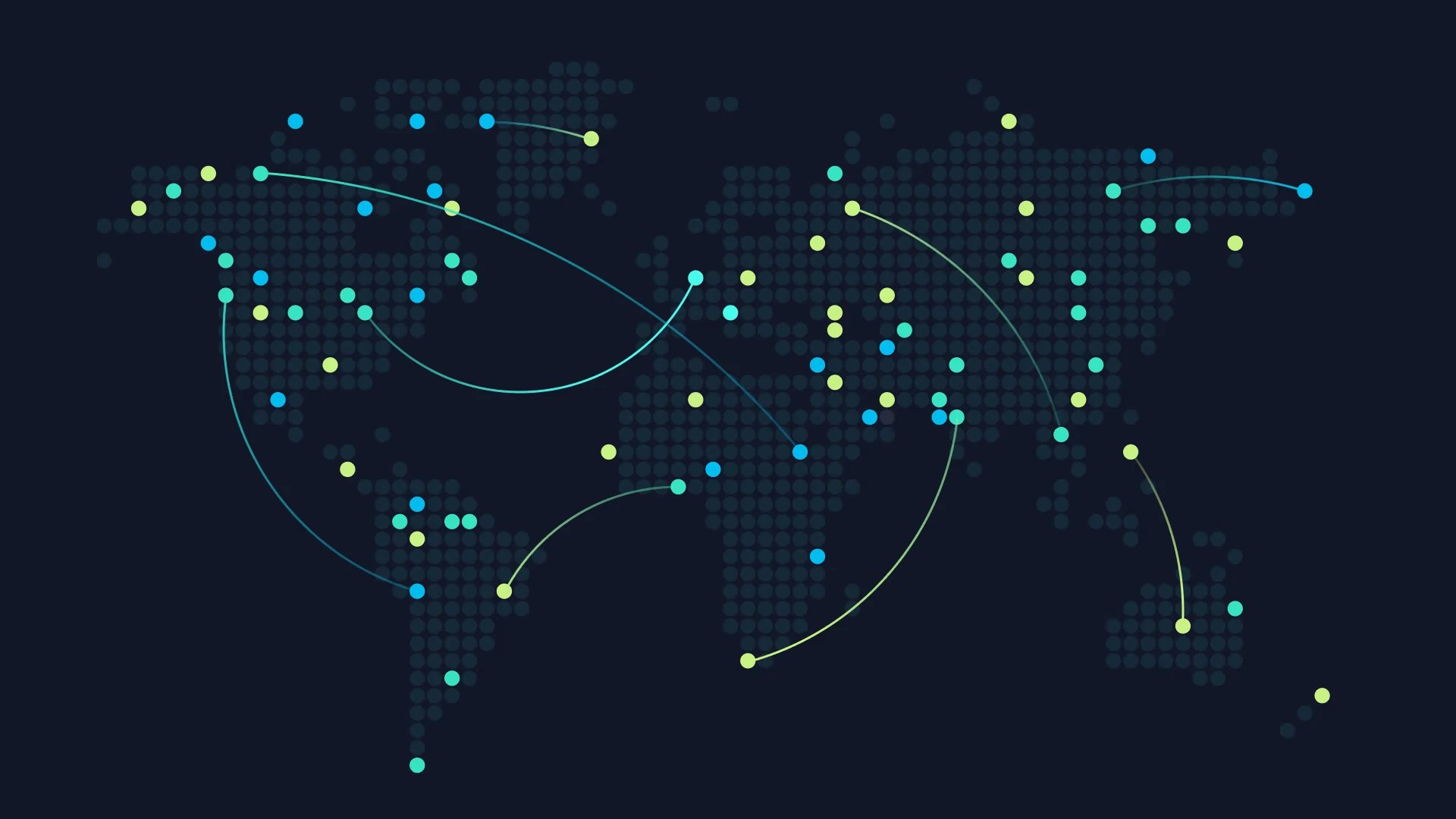
In the traditional "siloed" financial model, every bank maintains its own internal database. When you send money, these private databases must talk to each other through complex reconciliation processes, which often causes delays. <Tooltip headline="Blockchain" tip="A distributed, immutable ledger that records transactions across a network of computers. Each block contains a set of transactions and links to the previous block." cta="Open the glossary" href="/user-docs/guides/glossary#blockchain">Blockchain</Tooltip> replaces this with distributed ledger technology (DLT).
<img src="https://mintcdn.com/jupiter-support/p5FdkagPcbEGL8wN/images/guides/blockchain/distributed-network.webp?fit=max&auto=format&n=p5FdkagPcbEGL8wN&q=85&s=2ec8ea76deb326ab9574cc3cee3c7410" alt="A world map with nodes in many countries, linked to each other" width="1920" height="1080" data-path="images/guides/blockchain/distributed-network.webp" />

Instead of a central authority, the ledger is kept by many independent participants, known as nodes. Because no single machine holds the only copy, the system has no single point of failure. Immutability comes from cryptographic hashing: each new block is mathematically linked to the previous one. If a past record were altered, the link would break, and the rest of the network would reject the change as invalid.

## Transactions, blocks and consensus

On a blockchain, transactions are not processed in isolation but bundled into units called blocks. For a block to be added to the permanent chain, the network must reach [consensus](/user-docs/guides/basics/consensus). This agreement process replaces the human oversight found in traditional clearinghouses.

Consensus is what prevents the "double-spend" problem, the risk that someone spends the same dollar twice: the network agrees on a single order of transactions, so the second spend is rejected. On the <Tooltip headline="Solana" tip="A high-performance blockchain designed for fast, low-cost transactions and scalable decentralized applications. Jupiter products use it as their main infrastructure." cta="Open the glossary" href="/user-docs/guides/glossary#solana">Solana</Tooltip> network, a new block is produced every fraction of a second. A block is first "confirmed", once validators holding more than two-thirds of the network's stake have voted for it, then "finalized", the network's strongest confirmation level. Once finalized, the transaction is settled permanently and cannot be reversed by any party.

## Smart contracts: deterministic finance

The most transformative feature of modern blockchains is the [smart contract](/user-docs/guides/basics/smart-contracts). These are not "contracts" in the legal sense, but programs stored on the ledger that run whenever a transaction calls them. They operate on a purely deterministic basis: if the predefined conditions of the code are met, the transaction executes exactly as written.

For example, a prediction market can use a smart contract as a neutral escrow agent. It holds the participants' funds and, upon receiving a verified data signal from an oracle, pays out the winners. Because the logic is public, participants do not need to trust each other or a third-party broker: they can verify the code, which executes exactly as written. They still rely on that code being free of bugs, and on whoever can upgrade it.

On Jupiter Predict, how a market settles depends on its route, and most winning positions are paid out when you select **Claim**. See [Settlement and payouts](/user-docs/trade/predict/settlement).

## The shift to atomic settlement

Blockchain solves the "latency of trust" that defines legacy finance. In traditional markets, a trade is agreed first and settled later: US stock trades, for example, settle one business day after the trade date (T+1). Until then, there is "counterparty risk", the possibility that one side fails to deliver after the trade is agreed.

<Tooltip headline="Onchain" tip="Actions or data that are recorded directly on the blockchain, making them transparent and verifiable." cta="Open the glossary" href="/user-docs/guides/glossary#onchain">Onchain</Tooltip> finance enables atomic settlement. The transfer of the asset and the payment happen in a single, inseparable step. If one part of the trade fails, the entire transaction is canceled by the network. This removes the risk that the other side fails to deliver and improves capital efficiency, as funds are never locked in a pending state while a trade settles. Other risks remain: the smart contracts and price oracles involved can still fail.

## Structural trade-offs: the pros and cons

While blockchain offers a new approach to data management, it is not a "magic bullet" for every use case. The technology involves inherent trade-offs that distinguish it from centralized systems.

The advantages:

* Resilience and uptime: because the network is distributed globally, it does not depend on any single server. Unlike a bank's server, which can go down, a blockchain keeps running as long as enough of its nodes are active.
* Radical transparency: every transaction can be audited by anyone in real time, a level of public accountability impossible in traditional private banking. It does not replace security audits of the programs themselves: see Jupiter's [Security](/user-docs/more/security) page.
* No middleman: by removing the need for intermediaries to verify trust, blockchain reduces the "middleman" costs of global commerce and settlement.

The challenges:

* The scalability trilemma: most blockchains struggle to balance security, decentralization and speed. Increasing speed often requires more centralized control, while maximizing decentralization can slow processing down.
* Governance complexity: unlike a corporation, where a CEO can make quick decisions, upgrading a blockchain requires agreement among a diverse group of stakeholders. This can make the technology slow to adapt or prone to "forks" (splits in the network).
* Resource intensity: a distributed ledger requires computing power across the globe to verify and store the same data many times over. Modern networks are becoming more efficient, but they are still more resource-heavy than a single centralized database.

## Diverse use cases: beyond digital currency

There are more uses of blockchain than cryptocurrency. Because the technology is fundamentally a tool for coordinating data and proving ownership without a central authority, its applications extend to almost every sector that needs high-integrity record-keeping.

* Supply chain provenance: Blockchain provides an unalterable "paper trail" for physical goods. By recording every hand-off on a public ledger, companies can give consumers a tamper-evident history of a product's journey, such as an ethically sourced diamond or a genuine pharmaceutical drug, as reliable as the data entered at each step.
* Self-sovereign identity: traditional digital identities are stored on centralized servers (like Google or Facebook). Blockchain enables identity systems where users own their data and verification status. You can prove your identity or credentials to a third party without revealing unnecessary personal information or relying on a central provider to keep your data safe.
* Intellectual property and governance: artists and creators can use blockchain to timestamp their work and manage royalty payments automatically through smart contracts. Many organizations also use blockchain for transparent voting systems, where every vote is recorded onchain, making the results auditable and resistant to tampering.

## Go deeper

<CardGroup cols={2}>
  <Card title="Security audits" icon="shield-halved" href="/user-docs/more/security">
    Independent audits of Jupiter's onchain programs, and what an audit does and does not guarantee.
  </Card>

  <Card title="Predict settlement and payouts" icon="scale-balanced" href="/user-docs/trade/predict/settlement">
    How Jupiter Predict markets resolve, and when you need to claim your winnings.
  </Card>
</CardGroup>


This documentation is built and hosted on [Mintlify](https://mintlify.com), a developer documentation platform.