{level}
{minutes ? About {minutes} min read : null}
 A cryptocurrency is a digital or virtual medium of exchange that uses cryptography for security. Unlike traditional fiat currencies issued by central banks, most cryptocurrencies run on decentralized networks built on [blockchain](/user-docs/guides/basics/blockchain) technology. They represent a fundamental shift in how value is defined, from a system of institutional trust to one of mathematical proof and computational scarcity.
## The engine of security: cryptography
The "crypto" in cryptocurrency refers to cryptography, the mathematical practice of securing communication and data. In traditional finance, security comes from physical vaults and institutional oversight. In digital assets, it comes from mathematical functions that make it virtually impossible to forge a transaction or impersonate an owner.
The primary mechanism is public-key cryptography. Every user holds a pair of keys: a [public key](/user-docs/guides/basics/crypto-wallets), which works like a bank account number that others use to send you funds, and a [private key](/user-docs/guides/basics/crypto-wallets), which acts as a digital signature to authorize transactions. Only the person holding the private key can move the assets, a level of individual control that traditional banking cannot replicate.
Beyond identity, cryptography uses hash functions to protect the integrity of the entire network. A hash is a "digital fingerprint" of data: if even a single character in a transaction changes, the fingerprint changes entirely. This makes the ledger tamper-evident, as any unauthorized change is detected and rejected by the network's cryptographic rules.
## A brief history: from crisis to code
The genesis of modern cryptocurrency lies in the 2008 global financial crisis. On October 31, 2008, an anonymous author using the name Satoshi Nakamoto published the Bitcoin whitepaper, and on January 3, 2009, the first block of the Bitcoin network, the "Genesis Block", was mined. Bitcoin was a direct response to the perceived weaknesses of the centralized banking system, such as inflation and third-party risk.
Earlier attempts at digital cash existed (like e-gold or b-money), but Bitcoin was the first to solve the double-spend problem without a central authority. Using a [Proof of Work](/user-docs/guides/basics/consensus) mechanism, it showed that a global, decentralized network could agree on the state of a ledger. Since then, the industry has grown from a niche experiment into a global asset class, spawning thousands of alternative projects (altcoins) with varying degrees of utility and innovation.
## Defining the asset: coins vs tokens
In the digital asset space, "coin" and "token" are often used interchangeably, but they sit on different technical layers of the ecosystem. Understanding the difference helps you navigate the market.
A cryptocurrency is a digital or virtual medium of exchange that uses cryptography for security. Unlike traditional fiat currencies issued by central banks, most cryptocurrencies run on decentralized networks built on [blockchain](/user-docs/guides/basics/blockchain) technology. They represent a fundamental shift in how value is defined, from a system of institutional trust to one of mathematical proof and computational scarcity.
## The engine of security: cryptography
The "crypto" in cryptocurrency refers to cryptography, the mathematical practice of securing communication and data. In traditional finance, security comes from physical vaults and institutional oversight. In digital assets, it comes from mathematical functions that make it virtually impossible to forge a transaction or impersonate an owner.
The primary mechanism is public-key cryptography. Every user holds a pair of keys: a [public key](/user-docs/guides/basics/crypto-wallets), which works like a bank account number that others use to send you funds, and a [private key](/user-docs/guides/basics/crypto-wallets), which acts as a digital signature to authorize transactions. Only the person holding the private key can move the assets, a level of individual control that traditional banking cannot replicate.
Beyond identity, cryptography uses hash functions to protect the integrity of the entire network. A hash is a "digital fingerprint" of data: if even a single character in a transaction changes, the fingerprint changes entirely. This makes the ledger tamper-evident, as any unauthorized change is detected and rejected by the network's cryptographic rules.
## A brief history: from crisis to code
The genesis of modern cryptocurrency lies in the 2008 global financial crisis. On October 31, 2008, an anonymous author using the name Satoshi Nakamoto published the Bitcoin whitepaper, and on January 3, 2009, the first block of the Bitcoin network, the "Genesis Block", was mined. Bitcoin was a direct response to the perceived weaknesses of the centralized banking system, such as inflation and third-party risk.
Earlier attempts at digital cash existed (like e-gold or b-money), but Bitcoin was the first to solve the double-spend problem without a central authority. Using a [Proof of Work](/user-docs/guides/basics/consensus) mechanism, it showed that a global, decentralized network could agree on the state of a ledger. Since then, the industry has grown from a niche experiment into a global asset class, spawning thousands of alternative projects (altcoins) with varying degrees of utility and innovation.
## Defining the asset: coins vs tokens
In the digital asset space, "coin" and "token" are often used interchangeably, but they sit on different technical layers of the ecosystem. Understanding the difference helps you navigate the market.
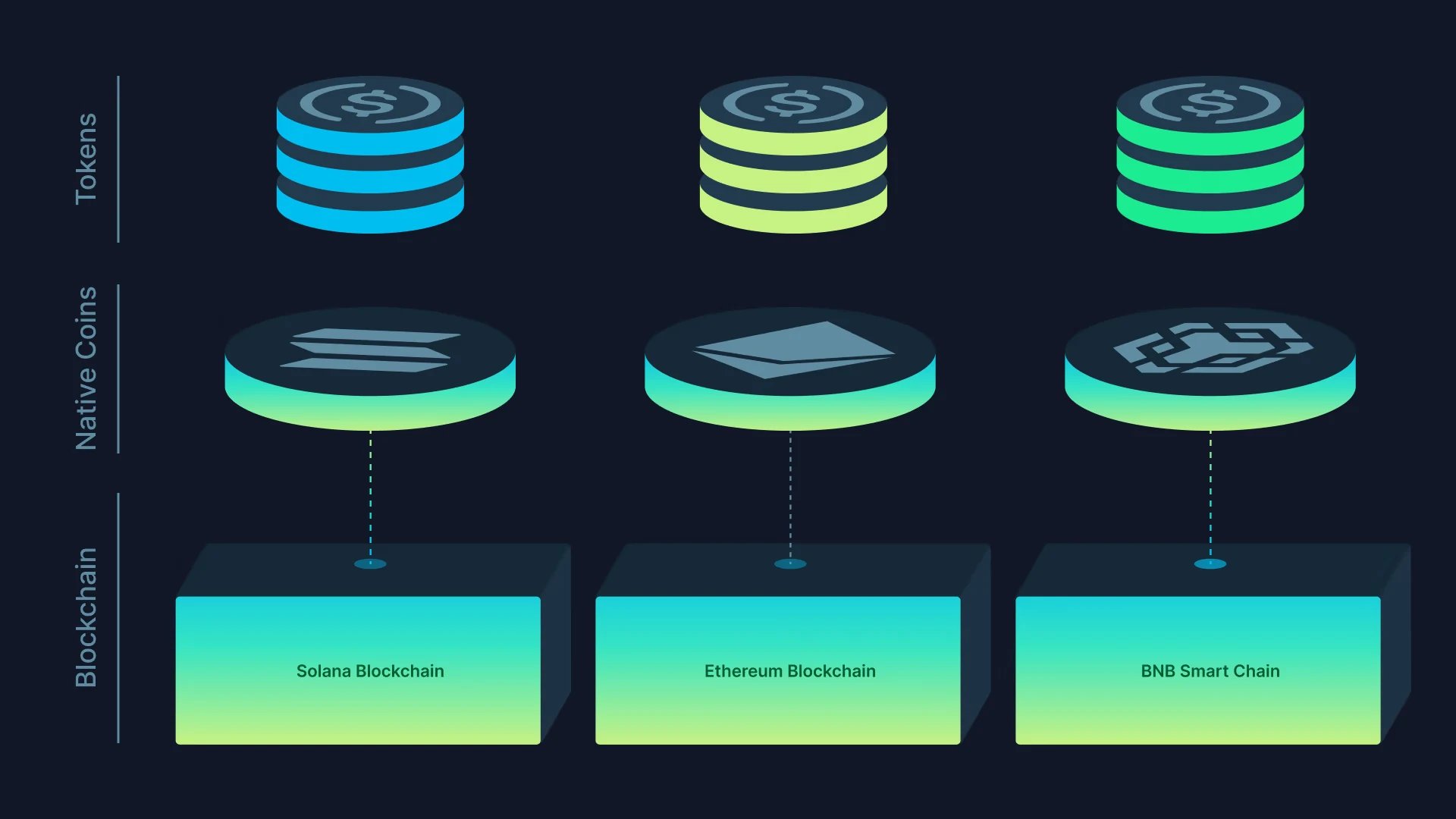 * Native coins: the native assets of a standalone blockchain. For example, Bitcoin (BTC) is the native coin of the Bitcoin blockchain, and