


The requirement for consensus
The fundamental challenge of a decentralized system is known as the Byzantine Generals Problem: how do you reach a reliable agreement among many parties when some of them may be malicious or providing false information?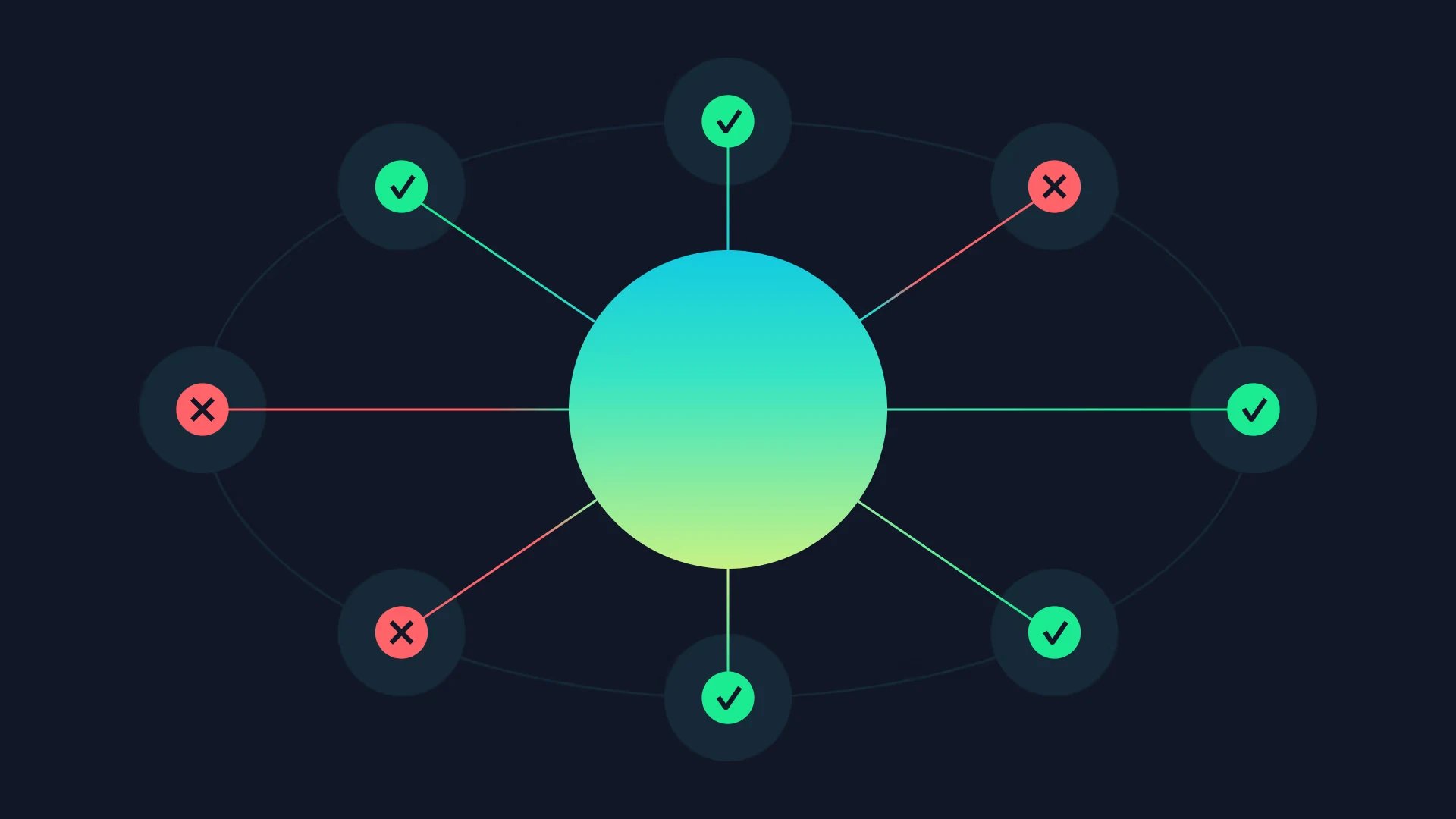
Proof of Work (PoW): security through energy
Proof of Work, the mechanism Bitcoin first used to secure a blockchain (building on earlier proof-of-work systems such as Hashcash), secures the network by requiring participants (miners) to solve computational puzzles. This “work” is a physical barrier to entry: the ledger is backed by an unforgeable cost of production. To rewrite the history of the chain, an attacker would need to control more than 50% of the network’s total computing power, an undertaking that is prohibitively expensive. This makes Proof of Work the oldest and most battle-tested way to secure a decentralized network, but it comes with significant trade-offs. The process is energy-intensive and has limited throughput: as more miners join, the puzzles get harder so that blocks keep arriving at the same pace. More miners add security, not speed, which can lead to high fees and slow transactions when demand is high.Proof of Stake (PoS): security through capital
Proof of Stake shifts the main security layer from physical hardware to financial capital. Ethereum, for example, switched from Proof of Work to Proof of Stake in September 2022. Instead of consuming electricity, participants (validators) “stake”, or lock up, an amount of the network’s native asset. This creates “skin in the game”: if a validator breaks the rules, for example by voting for two conflicting blocks, the network can “slash”, or destroy, part of its stake as a penalty. This model uses far less energy than Proof of Work. It also lowers the barrier to entry by removing the need for specialized mining rigs. However, Proof of Stake faces ongoing criticism regarding centralization. Because those with the most capital earn the most rewards and have the most influence, it can create a “rich get richer” cycle that concentrates power in the hands of a few large holders over time.Proof of History (PoH): the Solana innovation
Proof of History is a timekeeping technique pioneered by . It is a clock, not a way to secure the chain on its own: Solana’s validators still vote on blocks with Proof of Stake, and SOL holders can delegate their SOL to a validator, such as Jupiter’s, to take part. In many consensus designs, nodes must message each other back and forth to agree on when each transaction happened, which creates a bottleneck. Proof of History avoids this with a “cryptographic clock”: a continuous chain of hashes, each computed from the previous one, that proves time has passed between two events. This is a type of Verifiable Delay Function (VDF). Transactions are recorded into this sequence, so validators already agree on their order when they vote. The trade-off for this performance is hardware. Validators need powerful machines and fast connections to keep up, which can limit how many participants can help secure the network.Solana’s consensus is changing. Its Alpenglow upgrade removes Proof of History from block production and replaces the current voting protocol with a new one designed for much faster finality. See Alpenglow on solana.com for its status.
Go deeper
Stake SOL
Delegate SOL to Jupiter’s validator, with native staking or JupSOL.
Native staking
How a native stake account, epochs and staking rewards work on Solana.