

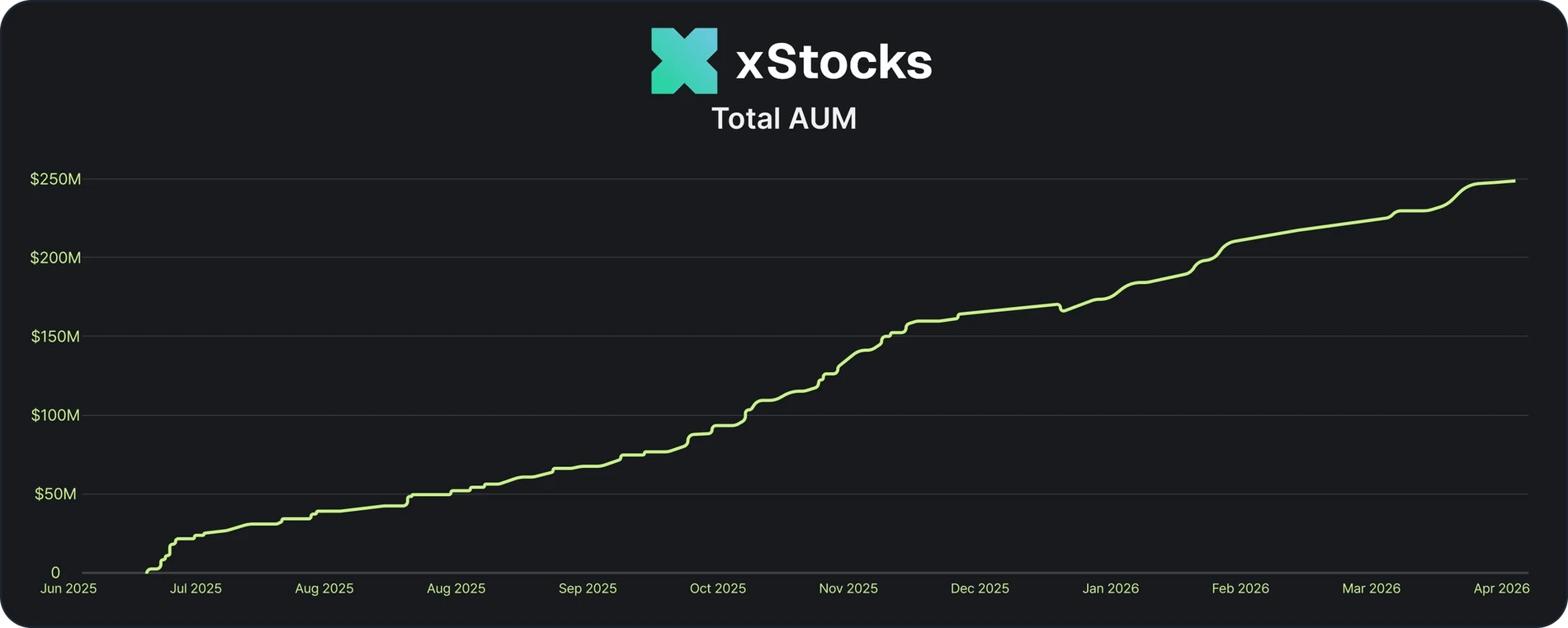
Total assets under management of xStocks from June 2025 to April 2026.
Tokenized stocks, synthetic stocks and perpetuals
exposure to equities comes through different types of financial instruments, generally grouped into three categories: tokenized stocks, synthetic assets and perpetual futures. Each of them is built differently and serves a different purpose.Tokenized stocks
- Tokens issued against a stock by a third party. Their backing varies by issuer: xStocks and Backpack tokens are backed 1:1 by real shares, which for xStocks are held by regulated custodian institutions, while Tessera’s pre-IPO tokens are loan participation rights with no ownership.
- When they are backed by the shares, they offer the closest exposure to the real asset. Their onchain price can still trade at a premium or a discount to the share.
Synthetic stocks
- Tokens that track a stock’s price using collateral and oracles, without holding the underlying shares.
- Because their value depends on a collateral mechanism rather than on the shares themselves, they carry depeg risk: the token’s value can drift away from the value of the stock it tracks.
Perpetual futures
- Perpetual markets are derivatives that track a stock’s price and use a , paid between longs and shorts, to stay aligned with it.
- They are built to trade, often with leverage, rather than to hold: a position carries no shares, dividends or voting rights, and it is not a token you can use elsewhere in . On jup.ag, Jupiter Perps has stock markets of this kind, such as SPCX (SpaceX), with USDC collateral and trading around the clock. They are not in the Jupiter Mobile app. See Beta markets.
How xStocks tokens work
xStocks are tokenized U.S. equities and ETFs, such as TSLAx (Tesla), NVDAx (Nvidia), and SPYx, which tracks the S&P 500. They are issued by Backed Assets (JE) Limited, a Jersey company, and offered to Kraken clients by Payward Digital Solutions Ltd.- Each xStock is backed 1:1 by the underlying security, held in regulated depositary institutions.
- The token gives you onchain price exposure to that security, not ownership of it: holders have no voting rights, no distribution entitlements and no legal claim on the company or its assets.
- Dividends are applied by rebasing: the issuer automatically increases the xStock balance in your wallet.
- You rely on the issuer and its custodian banks. An insolvency or operational failure on their side could affect the redemption of the underlying.
Where and when tokenized stocks trade
Tokenized stocks live on two markets.- Primary market: minting new tokens against the underlying stock, or redeeming them, goes through the issuer. It typically requires an account with the issuer and identity checks (), depends on your jurisdiction, and can involve minimum amounts or settlement delays. Some products, such as pre-IPO exposure tokens, may not be redeemable into shares at all.
- Secondary market: once tokens are circulating onchain, they trade on Solana wherever there is liquidity, Jupiter included. Most tokenized stocks are tradable 24/7; some Ondo tokens trade 24/5 and may have additional trading pauses. Liquidity is usually deepest while the US stock market is open.
Go deeper
Tokenized stocks
Issuers, redemption rights, trading hours, eligibility and risks.
xStocks on Jupiter Lend
The xStocks structure in full, and its risks as collateral.
Perps Beta markets
Stock perpetuals on Jupiter: funding, fees and limits.