


From holding to using
DeFi offers ways to use tokenized assets while you keep holding them. The main one is lending and borrowing. On Jupiter Lend, some xStocks can be used as : SPYx and QQQx, which track the S&P 500 and the Nasdaq-100, and TSLAx and NVDAx, which track Tesla and Nvidia. The list grows as vaults are added: the xStock filter on the Borrow page shows the current one. With these xStocks, you can:- Earn a Supply APY on the xStocks you supply as collateral, but only while an incentive is active. This yield does not come from the stock: it comes from incentives co-funded by Jupiter and partners, which can change or end at any time. Without one, the Supply APY is 0%.
- Borrow USDC or JupUSD against your xStocks, to use their value without selling them.
- your exposure with Multiply, which borrows against an xStock and buys more of it in one step (leverage looping), against USDC or JupUSD.
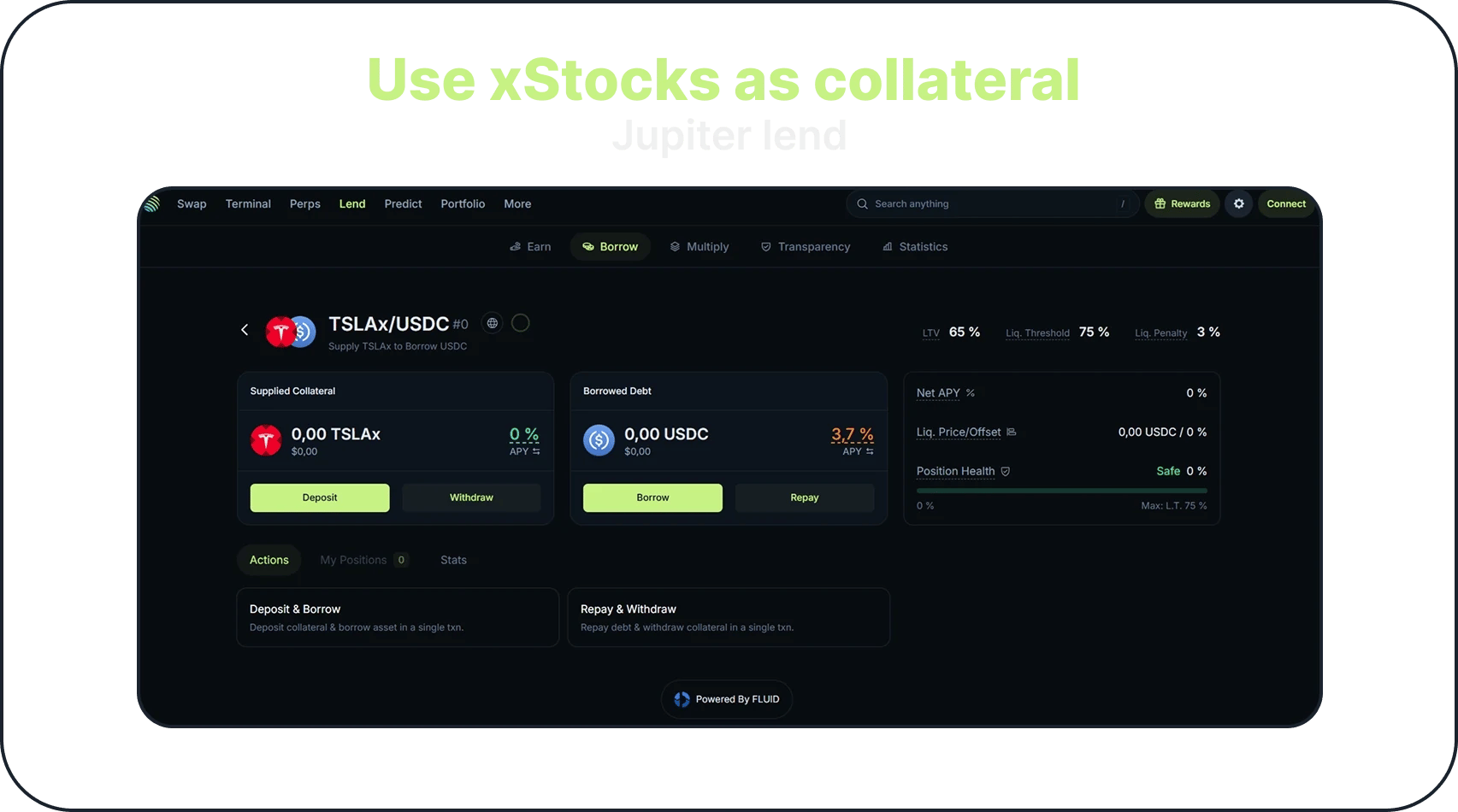
A TSLAx / USDC vault on Jupiter Lend, from an earlier version of jup.ag with a top navigation bar. Rates date from when the screenshot was taken.
- Prices on weekends and holidays: the vaults’ oracle updates 24 hours a day, 5 days a week. On weekends and US market holidays, it stays at the last traded price while the token keeps trading onchain, so the two can drift apart.
- Pauses: xStock markets pause for about 5 minutes at each trading session change, and 24 hours before a corporate action such as a dividend or a split. While a vault shows Vault Suspended, you cannot repay or add collateral, so keep a buffer before scheduled market events.
- Single stocks move more: TSLAx and NVDAx are rated High Risk, the index-based SPYx and QQQx Medium Risk.
- Availability: xStock vaults are not available on jup.ag in some regions, and opening a new xStock position asks you to acknowledge a disclosure of these risks.
Example strategy
For illustration only, not a recommendation: say a user holds $5,000 of tokenized equities across three xStocks:- $2,000 of SPYx (S&P 500)
- $2,000 of TSLAx (Tesla)
- $1,000 of NVDAx (Nvidia)
- Buy more xStocks with it, which raises both their exposure and their liquidation risk: gains grow if prices rise, and losses grow if they fall. Multiply runs this loop in one step.
- Put it into a strategy that aims to earn more than the borrowing cost, keeping in mind that the borrow rate is variable and no strategy’s return is guaranteed.
- Use it for other DeFi opportunities.
xStocks on Jupiter today
You can buy xStocks on jup.ag from the Stocks screener or from a stock page, where they appear next to other issuers’ tokens. They are not available in every jurisdiction. Several xStocks are available as collateral on Jupiter Lend, and the list is updated as new vaults are added. If you hold xStocks or use them as collateral on Jupiter Lend, Jupiter Portfolio shows your holdings and your lending positions, with each position’s health and its supplied and borrowed amounts.Go deeper
xStocks on Jupiter Lend
Supported xStocks, vault parameters, incentives and risks.
Multiply
How leveraged positions loop collateral and debt in one step.